What Is a Money Bowl? Meaning, Ritual & How to Create One at Home

Introduction
If you enjoyed creating a money bowl - or recently came across the idea - you’re not alone. Money bowls have quietly moved from spiritual circles into the world of intentional living and mindful home décor. At their heart, they’re about focus, symbolism and awareness, rather than superstition or rigid rules.
This guide explains what a money bowl is, where the idea comes from, and how to create one in a way that feels calm, modern and personal.
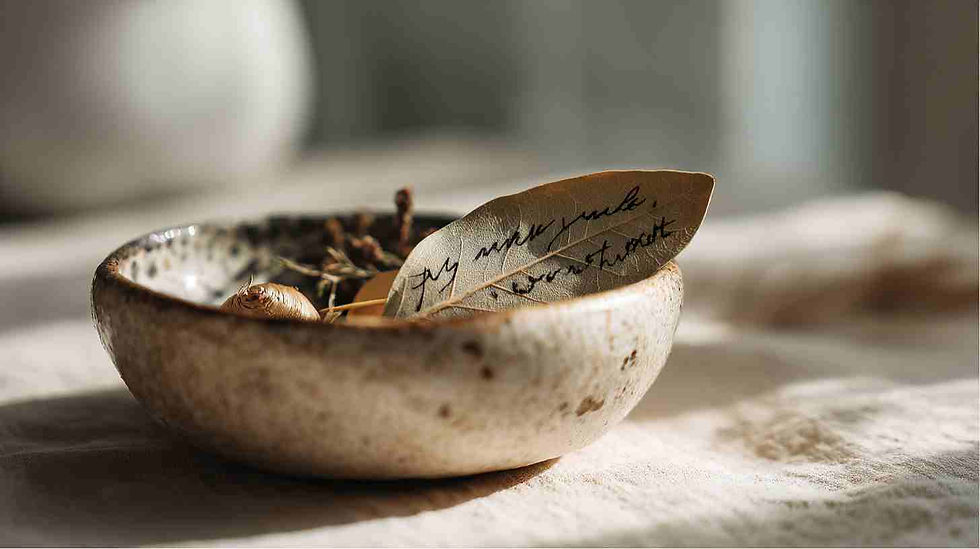
What Is a Money Bowl?
A money bowl is a small decorative bowl filled with symbolic items linked to prosperity, stability and growth. Traditionally, it’s placed somewhere visible in the home as a gentle reminder of intentions around money, work or security.
In a modern setting, it works best as:
A visual intention-setting tool
A mindful styling object
A slow-living ritual rather than a “luck charm”
Where Did Money Bowls Originate?
Money bowls are inspired by a mix of traditions:
Folk practices centred around harvest and prosperity
Symbolic home rituals focused on intention
The idea that everyday objects influence mindset and behaviour
Over time, the practice has softened—becoming less about rules and more about personal meaning.
What You’ll Need to Make a Money Bowl
There’s no fixed formula. A money bowl should feel intuitive, not prescriptive.
The Bowl
Choose a bowl that feels grounding and timeless. Neutral colours and simple shapes help keep the focus on intention rather than decoration.
Ingredients & Symbolic Elements
You can use everyday items—often the most powerful choices.
Rice: Symbolises abundance, nourishment and stability. Rice represents “having enough” and steady support rather than excess. Use a small layer at the base of the bowl or a few spoonfuls.
Coffee Beans: Associated with energy, momentum and productivity. Coffee works well for intentions linked to work, creativity or forward movement. Whole beans add texture and a subtle scent.
Dried Beans or Lentils: Symbolises growth, potential and multiplication—something small developing into something larger. Ideal for long-term goals or business intentions.
Coins or Notes: Represent circulation and flow of money. A few coins are enough.
Bay Leaf or Cinnamon Stick: Bay leaves are often used for written wishes; cinnamon adds warmth and forward motion.
You don’t need everything. Choose a few elements that resonate and keep the bowl uncluttered.

How to Create Your Money Bowl (Step-by-Step)
Place the empty bowl somewhere quiet
Add items slowly, one at a time
Set a clear intention as you place each piece
Keep the arrangement simple and uncluttered
This should feel closer to mindful styling than a ritual you need to “get right”.
Where to Place a Money Bowl in Your Home
Good locations include:
A hallway shelf
A home office or workspace
A living room sideboard
Choose somewhere you’ll naturally see it often, without it feeling intrusive.
How to Use a Money Bowl Day to Day
A money bowl doesn’t require daily interaction. Subtle habits work best:
Notice it when budgeting or planning finances
Add spare change intentionally
Refresh it seasonally rather than constantly
Overworking it can dilute its purpose.
Common Misconceptions
You don’t need expensive or rare items
It’s not about instant results
There’s no single “correct” way to do it
A money bowl is a visual anchor, not a guarantee.
Why This Practice Resonates With Modern Living
In a busy, digital world, money bowls offer something simple: a pause. They create a moment of awareness around money without pressure, apps or constant tracking—just a quiet reminder in your living space.
Closing Thought
A money bowl won’t magically change your finances overnight. What it can do is help you slow down, reflect and stay intentional.
Sometimes, that’s more powerful than it seems.
What Is a Money Bowl? Frequently Asked Questions
1. Do money bowls actually work?
A money bowl isn’t about guaranteed financial results. Its value lies in intention and awareness. By keeping money top of mind in a calm, visual way, many people find they become more mindful about spending, saving and planning.
2. Do I need to use specific items or crystals?
No. There’s no required list. The most effective money bowls are personal and simple. Choose items that symbolise abundance or security to you, rather than following a rigid formula.
3. How often should I refresh or change my money bowl?
There’s no set rule. Some people refresh their bowl monthly or seasonally, while others leave it untouched for long periods. If it starts to feel cluttered or forgotten, that’s usually a good moment to reset it.
4. Where is the best place to keep a money bowl?
The best place is somewhere visible but calm—such as a hallway shelf, home office or living room sideboard. Avoid hiding it away, but also avoid placing it somewhere chaotic or purely decorative.
5. Is a money bowl a spiritual or religious practice?
Not necessarily. While it has roots in various cultural traditions, many people use money bowls today simply as an intention-setting or mindfulness tool. You can approach it in a completely non-spiritual, practical way.


Comments