What to Do With Autumn Garden Cuttings: Make Natural Incense

Updated: Sep 29
The best autumn garden cuttings to save for incense are rosemary, lavender, culinary sage, culinary bay and clean, untreated fruit-tree prunings. Dry herbs completely before using them, season thicker wood for much longer, and avoid unknown, treated, diseased, mouldy or roadside material.
Not every garden cutting is suitable for incense simply because it is natural. Correct identification, clean growing conditions and thorough drying matter. Used carefully, familiar aromatic herbs and selected prunings can give you a useful seasonal supply of incense material at almost no extra cost.
If you are planning ahead for next year, start with our guide to growing your own incense garden. It explains which aromatic plants are particularly useful to grow with incense-making in mind.

Why save autumn garden cuttings for incense?
Late-summer and autumn pruning often happens just as we begin spending more time indoors. Drying a few selected cuttings lets you carry the scent of the garden into the colder months without buying a completely new set of ingredients. It is also a satisfying way to use stems and leaves that would otherwise be discarded.
For incense, the goal is not to burn a large handful of garden material. A little dried aromatic plant matter is usually enough. Once fully dry, it can be crumbled for loose incense, ground into a finer blend, or combined with resins and other traditional incense ingredients. This gives you far more control over the fragrance and the amount of smoke.
The best autumn garden cuttings to save
Rosemary
Rosemary is one of the easiest places to start. Mature plants often need a trim after summer, and both the leaves and thinner stems hold plenty of fragrance when dried. The scent becomes warmer and woodier when heated than it smells on the fresh plant, which works particularly well in autumn blends.
For a deeper look at the plant, see How to Grow Rosemary for Incense. Ready to use a dried harvest? Continue with Can You Burn Rosemary as Incense?.
Lavender
Do not throw away all those dry lavender stalks after flowering. The flowers are the most fragrant part, but the stems can also be saved and used sparingly in loose incense. Strip off any dusty or damaged material first and make sure the stems are completely dry before storing them.
For growing and harvest advice, see How to Grow Lavender for Incense. If you already have cut stems, follow How to Dry Lavender for Incense before adding the flowers to a blend.
Culinary sage
Ordinary culinary sage can be dried in the same way as other kitchen herbs. Its aroma is strong, so it works best as one component of a blend rather than the whole blend. This is also a good reason not to gather an unknown wild sage or ornamental plant simply because it looks similar: use plants you can identify confidently.
Culinary bay
Leaves from a known culinary bay tree, Laurus nobilis, can be dried and used in very small quantities. They have a sharper scent than rosemary or lavender and can easily dominate a mix. Be especially careful with identification because several unrelated evergreen shrubs are commonly called laurel but are not culinary bay.
Clean fruit-tree prunings
Small pieces of untreated, disease-free, fully seasoned fruitwood can contribute a gentle woody note. Apple and pear are the easiest options to understand because they are already commonly used as smoking woods. The wood needs far longer to dry than herb stems, so think of autumn pruning as material for later rather than something to burn immediately.
We cover this subject in more detail in Apple Wood for Incense: How to Use Fruit Tree Prunings.
Garden materials I would not burn as incense
The safest approach is conservative: if you cannot identify a plant with certainty or do not know how it was grown, leave it out. Incense is concentrated exposure to heated plant material, so this is not the place to experiment with mystery clippings.
Unknown leaves, berries, bark or prunings collected simply because they smell interesting.
Known poisonous ornamental plants, or any material you are unsure about.
Mouldy, damp, diseased or pest-damaged plant material.
Plants treated recently with pesticides, fungicides or other garden chemicals.
Wood that is painted, stained, pressure-treated, glued or otherwise processed.
Roadside or heavily polluted material where contamination is possible.
Natural does not automatically mean harmless, and all smoke contains particles and irritants. If anyone in the home has asthma, respiratory sensitivity or reacts badly to smoke, a low-smoke electric incense warmer or simply enjoying the dried botanicals without burning them may be the better choice.
How to dry garden cuttings for incense
1. Sort them before drying
Keep only clean, healthy plant material. Shake off insects, remove brown or mouldy sections and separate thick woody stems from leafy herbs because they dry at very different speeds. If the material needs washing, rinse it quickly and let all surface moisture disappear before bundling it to dry.
2. Air-dry herbs in small bundles
Tie rosemary, lavender or sage into small, loose bunches and hang them somewhere dry, shaded and well ventilated. Large tight bundles trap moisture. You can also spread leaves and short stems in a single layer on a mesh rack or tray, turning them occasionally.
3. Give thicker wood much longer
A herb stem may feel crisp within days or a couple of weeks, while wood can require months of seasoning depending on thickness and storage conditions. Do not rush it. Damp wood smoulders, creates unpleasant smoke and can develop mould while stored.
4. Check before storing
Herb leaves should crumble easily and stems should snap rather than bend. Store only once everything is fully dry, ideally in labelled paper bags or airtight jars kept away from direct sun. Labelling matters more than you might think: dried leaves can become surprisingly difficult to identify several months later.
How to turn dried cuttings into natural incense
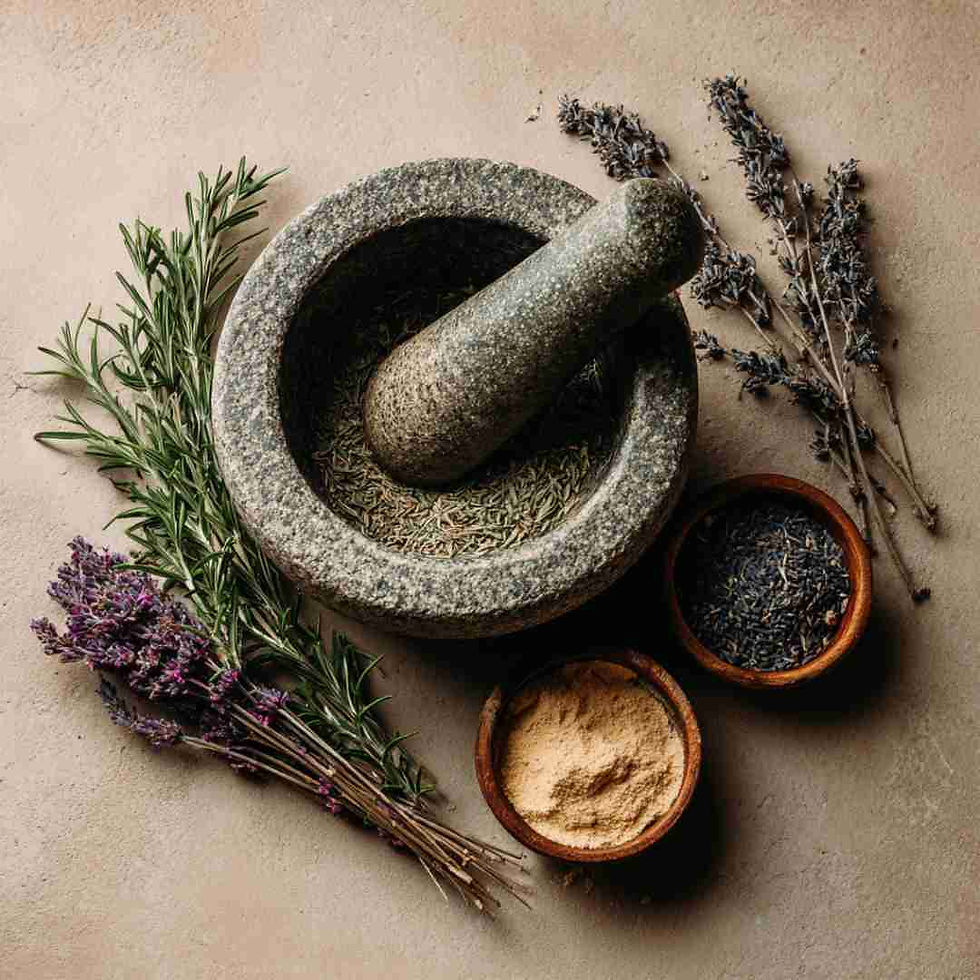
The simplest route is loose incense. Crumble or grind a small amount of fully dried material and combine it with other aromatic ingredients. Start with tiny batches so you can test the scent before using up your harvest. A mortar and pestle is enough for leaves and flowers; woody material needs to be properly seasoned and reduced much more finely. For the basic blending method, see How to Make Loose Incense at Home.
A simple autumn garden blend
2 parts dried rosemary leaves
1 part dried lavender flowers and fine stems
1 part dried orange peel
1/2 part culinary sage
A small pinch of finely crumbled culinary bay
Mix the ingredients and store the blend for a day or two before testing it. Heat only a small pinch at first. If sage or bay overwhelms the blend, add more rosemary or orange peel. If you want a deeper incense character, a little frankincense or benzoin can be added separately when you burn the mix.
Want more seasonal combinations? Try 5 Natural Incense Blends to Make for Autumn.
Prefer ready-made ratios? Explore the 15 Herbal Incense Recipe Cards for printable botanical blend ideas.
If you want to go beyond loose blends and work with powders, binders and shaped incense, continue with How to Make Incense Cones at Home or How to Make Incense Sticks at Home.
How to burn your garden incense safely
Use a purpose-made incense burner or heatproof dish on a stable, non-flammable surface. Loose incense can be heated on a suitable charcoal disc, an electric incense heater or another method designed for incense. Use much less material than you think you need and keep the room ventilated.
Never leave burning or hot incense unattended. Keep it away from curtains, dried flower arrangements, children and pets, and remember that charcoal remains dangerously hot long after the visible glow seems to have faded. If the scent becomes acrid or the room fills with smoke, stop: incense should not require you to tolerate an uncomfortable amount of smoke.
If your homemade incense keeps smelling harsh rather than aromatic, Why Does My Incense Smell Burnt? can help you troubleshoot excessive heat, damp material and other common causes.
Make autumn pruning part of your incense year
Once you start looking at garden cuttings as ingredients rather than waste, autumn pruning becomes much more interesting. Save only what you know, dry it properly and keep the batches small. Over time you will discover which plants from your own garden actually smell good when heated and which are better left for the compost heap.
That is also the best way to keep natural incense personal. The goal is not to burn everything the garden produces, but to build a small, reliable collection of aromatic materials you understand and enjoy.
For another plant-led approach to home ritual, you may also like Smoke Cleansing Without Sage: 8 Alternatives to Try.
Frequently Asked Questions
1. Can I burn fresh rosemary or lavender as incense?
It is better to dry it first. Fresh material contains water, which encourages smouldering and can create a harsher, smokier burn. Fully dried herbs are also easier to grind and blend consistently.
2. How long should garden herbs dry before I use them for incense?
It depends on the plant, stem thickness, humidity and drying method. Rather than relying on a fixed number of days, wait until leaves crumble easily and fine stems snap cleanly. Thick woody prunings require far longer than herbs.
3. Can I use any fruit-tree wood for homemade incense?
No. Use only clean, untreated wood from a tree you can identify, and make sure it is fully seasoned. Do not assume that the leaves, bark or other parts of a fruit tree are equally suitable just because the wood has a history of culinary smoking use.
4. Is homemade garden incense safer than shop-bought incense?
Not automatically. Natural plant smoke can still irritate the eyes and respiratory system. Ingredient identification, ventilation, the amount burned and the way the incense is heated all matter.
5. What is the easiest garden plant for a beginner to use?
Rosemary is a good starting point because it is easy to identify, dries readily and has a recognisable aroma. Begin with a small amount in a loose blend rather than making a large batch of incense immediately.


Comments