5 Natural Incense Blends to Make for Autumn

Updated: Sep 29
These five natural autumn incense blends use dried herbs, citrus peel, fruitwood and traditional resins to create seasonal scents without relying on synthetic “pumpkin spice” fragrance. Try Orchard Ember for woody citrus, Lavender Hearth for soft floral warmth, Spiced Resin for a rich balsamic scent, Autumn Garden for a greener herbal blend, or Dark Orchard for something deeper and earthier.
All five are loose-incense recipes, so they are easy to test and adjust before you commit to cones or sticks. Measure in parts rather than grams, make a small batch first and judge the fragrance when heated — not only when it is sitting in the jar.
If you want to choose a fragrance direction before mixing, start with Best Incense Scents for Autumn: From Spiced Woods to Pumpkin-Inspired Blends. This article focuses on the actual blends and how to make them.
This post contains affiliate links. As an Amazon Associate, I earn from qualifying purchases.

Quick pick: choose Orchard Ember for woody and citrusy, Lavender Hearth for softer and sweeter, Spiced Resin for resin-rich warmth, Autumn Garden for an herb-led blend, and Dark Orchard for the deepest scent.
Before you start blending
Use completely dry ingredients and grind them separately before mixing. Leaves and petals can be fairly fine; resins are often easier to crush when cool. Keep spices restrained because cinnamon, clove and similar ingredients can become sharp when heated. The finished blend should smell balanced in the jar, but the real test is always how it smells when warmed or burned.
For a lower-smoke option, warm a small amount gradually in an electric incense burner rather than directly combusting the blend. If you prefer charcoal, use purpose-made incense charcoal and start with a very small pinch after the disc has heated through. For the full method, see How to Make Loose Incense at Home. Good ventilation still matters whichever method you choose.
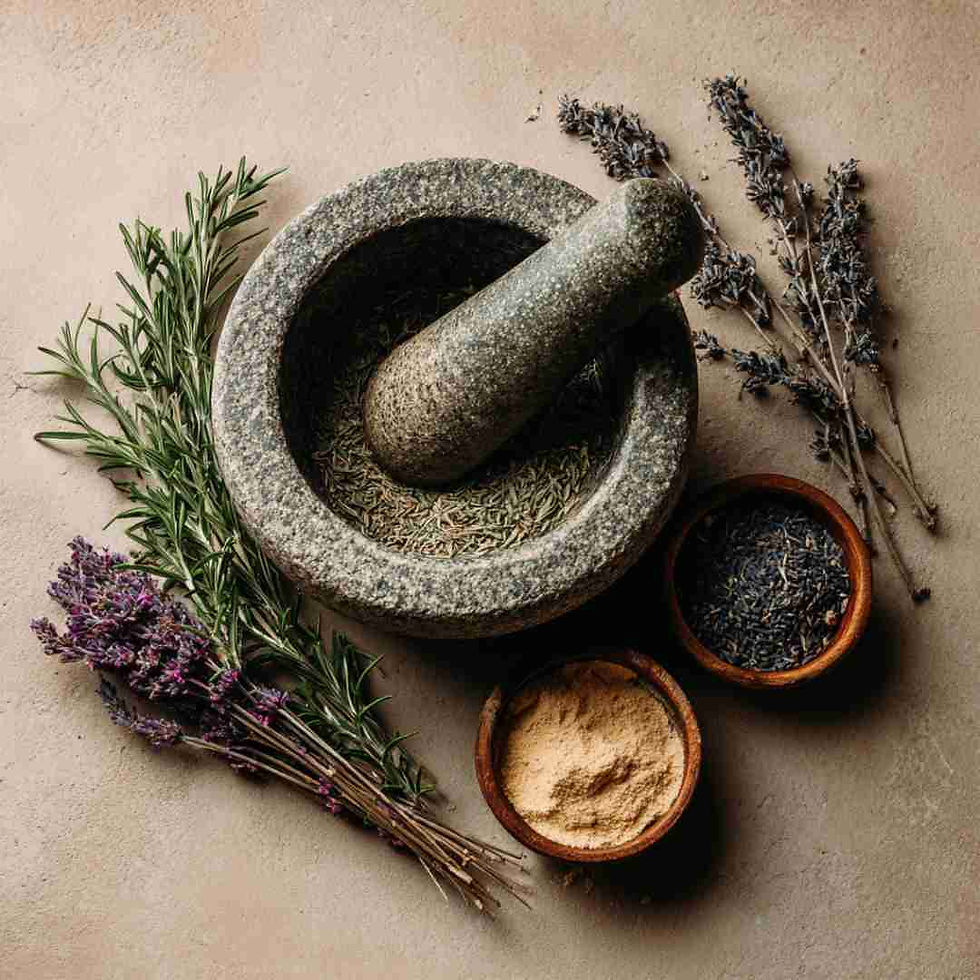
A small mortar and pestle is useful for gently breaking down dried herbs and resins before blending, without turning everything into a very fine powder.
1. Orchard Ember
This is the most outdoorsy blend of the five: woody, citrusy and herbal rather than sweet. It is particularly satisfying if you have saved clean apple or pear prunings from your own garden, although the wood must be fully seasoned and finely prepared before use.
2 parts finely powdered, fully seasoned apple or pear wood
1 part dried orange peel
1 part dried rosemary
1/4 part ground clove
Use clove as an accent, not a main ingredient. If the first test smells too smoky, reduce the wood and increase the orange peel and rosemary. You can also heat the mix rather than letting it directly combust, which often reveals more of the aromatic notes.
For more on selecting and preparing orchard wood, see Apple Wood for Incense: How to Use Fruit Tree Prunings.
2. Lavender Hearth
Lavender is usually associated with summer, but mixed with rosemary and benzoin it becomes softer and warmer. This blend is a good way to use the last dried flowers and stems after cutting lavender back at the end of the season.
2 parts dried lavender flowers
1 part dried rosemary
1 part benzoin resin
1/2 part dried orange peel
Benzoin has a naturally warm, balsamic sweetness, so begin with less if you prefer a greener scent. If you do not have benzoin, the lavender, rosemary and orange still make a pleasant simple blend on their own.
3. Spiced Resin
For a more recognisably incense-like autumn fragrance, combine frankincense with a softer resin and just enough spice to suggest the season. This is richer than the garden-based blends, so use it sparingly.
2 parts frankincense resin
1 part benzoin resin
1 part dried orange peel
1/4 part cinnamon bark
Crush the resins into small pieces rather than trying to create a dust-fine powder. Add the orange peel and cinnamon, then test a tiny amount. Too much cinnamon can quickly make the fragrance feel harsh, so increase it only after testing the original ratio. New to frankincense, benzoin or myrrh? Compare them in 5 Best Natural Resins for Incense Making.
4. Autumn Garden
This is the blend to make after pruning the herb bed. It smells drier, greener and more botanical than a conventional autumn candle, which is exactly why it works. It is also an easy recipe to customise around what you actually grow.
2 parts dried rosemary
1 part dried lavender
1 part culinary sage
1/4 part finely crumbled culinary bay
Keep bay and sage in the background. If they dominate, add more rosemary or lavender rather than trying to mask them with spice. Only use culinary bay that you can positively identify; do not substitute another shrub commonly called laurel.
If you like the idea of blending from your own harvest, Grow Your Own Incense Garden: 7 Plants for Homemade Incense will help you plan what to grow. If you are pruning now, Autumn Garden Cuttings for Incense: What to Save & Avoid shows which seasonal cuttings are useful and which to leave out.
5. Dark Orchard
Dark Orchard sits between a garden blend and a traditional resin incense. Myrrh gives it an earthy depth, while orange and rosemary stop the fragrance becoming too heavy.
2 parts myrrh resin
1 part dried orange peel
1 part rosemary
1/2 part finely powdered, fully seasoned apple wood
If myrrh is too dark for your taste, use one part myrrh and one part frankincense instead. If you do not have suitable fruitwood, simply omit it; never use unidentified or treated wood just to complete the recipe.
Want more ready-made incense formulas? Explore the 15 Herbal Incense Recipe Cards for printable blend ratios you can keep beside your ingredients while experimenting.
How to make a loose incense blend
1. Dry everything thoroughly
Moisture is the enemy of a clean, predictable blend. Herbs and peel should feel crisp, not leathery. Store them only once they are completely dry. Resins do not need drying in the same way, but keep them clean and free from debris.
2. Grind ingredients separately
Different ingredients break down at different speeds. Grinding each one separately gives you much more control than putting everything into a grinder at once. It also lets you keep resin as small granules while making herbs finer.
3. Measure by parts
For a first test, make one part equal to half a teaspoon. That is enough to experience the blend several times without wasting ingredients. Write the ratio on a label before you start adjusting it; otherwise it is surprisingly easy to forget what you changed.
4. Let the blend rest
A day in a closed jar allows the dry ingredients to mingle, particularly where citrus peel and resin are involved. It will not transform a bad formula, but it makes it easier to judge the overall scent before the next test.
5. Test a tiny amount
The fragrance of unburned incense can be very different from the heated version. Use a small pinch, make one adjustment at a time and record it. This simple habit is the difference between developing a blend and randomly adding more ingredients until the jar is full.
Want to turn a blend into cones or sticks?
Loose incense is forgiving because it does not need to stay lit by itself. Cones and sticks are a different project: particle size, combustible base and binder all affect how they burn. First perfect the scent as a loose blend; then convert a small amount rather than using your whole batch.
Once you like the scent, continue with How to Make Incense Cones at Home or How to Make Incense Sticks at Home to learn how particle size, binders and combustible ingredients change the formulation.
You may also enjoy What Is an Incense Trail? How to Make and Burn One if you want another way to work with loose incense.
A note on smoke and natural ingredients
Homemade does not mean smoke-free or risk-free. Heated resins, herbs, wood and spices can all produce smoke and airborne irritants. Keep quantities modest, ventilate the room and stop if the smoke feels uncomfortable. Anyone with asthma or smoke sensitivity may prefer a low-smoke warmer or an unburned botanical fragrance method instead.
Most importantly, do not improvise with unknown plant material. A beautiful autumn walk can provide inspiration, but it is not an ingredient list. Use botanicals and woods you can identify and source confidently.
Want ready-to-use seasonal incense ideas? Explore the Seasonal Botanical Incense Blend guide.
Frequently Asked Questions
1. Do I need charcoal to burn loose incense?
No. Loose incense can be used with purpose-made charcoal, but an electric incense warmer is another option and can produce less visible smoke because the ingredients are heated rather than directly burned.
2. Can I use fresh herbs in these autumn incense blends?
Dry herbs first. Fresh herbs contain moisture and tend to smoulder rather than release a clean, controlled fragrance. Fully dried ingredients are also much easier to measure and grind.
3. Can I change the ratios in an incense recipe?
Absolutely. Treat these recipes as starting points. Make a small test batch, change only one ingredient at a time and keep notes so you can recreate the version you like best.
4. What can I use instead of frankincense or benzoin?
You can make herb-only blends without resin. Rosemary, lavender, dried orange peel and a little culinary sage make an accessible combination. The fragrance will be lighter and more botanical than a resin-based incense.
5. How should I store homemade loose incense?
Keep it dry, labelled and away from direct sunlight, ideally in a clean airtight jar. If a blend ever smells musty or shows signs of moisture or mould, discard it rather than burning it.


Comments